Some thoughts on evaluating job opportunities


I woke up at 4AM PST today to watch the first innings of Eng vs Pak in the cricket World cup. And at 5AM , I saw an email pop up from someone I mentor – who wanted some help in thinking through whether he should stay in his current job, or move to a new opportunity that came up recently. Some variant of this has been a common theme for such conversations I have had for the last few years thanks to the talent war in the world of tech.

black bumper plates
Photo by Pixabay on Pexels.com

I have used a very simple framework to evaluate jobs for myself and we talked through it over phone . Since it might be useful for others too, I thought I will share it here. Its just four questions. If I could answer any 3 of the 4 in favor of the job I had – I passed on new opportunities. Any lower and I went go through the process with the new opportunity and rechecked which way the 4 point scale was tilting.

1.  Is the job paying you well overall ?

The “overall” part is important here to make fair comparisons. Its the easiest comparison on the planet given the tangible nature of the dimension. If the current job does not make you depressed every time you look at your bank statement or paycheck , it will take a lot more convincing to leave the current gig. Money is a rather weird motivator for both you and your employer. Early in your career – it is perhaps the biggest differentiator between jobs. But at some point along the way – if you are good at what you do, you will figure out that most employers won’t let money be the big reason to not hire you or retain you.

2. Does the current job continue to inspire you ?

If the job does not satisfy your soul, money alone will not keep you there very long. Are you solving problems that you feel are important ? Are you learning things that you did not know before ? Are you able to apply things you are good at in your job ? If so – you most probably will stay even if pay is a little bit low.

3. Do you really like your boss ?

Your direct boss represents the company to you more than anything else. In a matrix organization where you have multiple bosses – this becomes a bit of an issue since you could get conflicting views from different senior folks. Though not as straight forward as money – this one is also a fairly easy judgement when it is about the current bosses . Most bosses are not that great in reality – a problem that matrix organizations can make better or worse quickly. The trick is judging correctly the new bosses who have all the incentive to be on their best behavior to try and get you to join them.

4. Do you see growth in your future ?

This is perhaps the hardest dimension since after the first few rungs of the corporate ladder, you are mostly going to operate in gray areas. And to make it even more complex – growth might come in terms of lateral moves instead of promotions and those are harder to evaluate. In many cases – the leadership forgets to clarify the elementary things like “do people actually know what it takes to grow from their current role?” or “are the standards we currently have for promotions still valid for the market we operate in?”. Given it is hard to base this decision purely on facts – It is more a question of perception of whether you are going to get stuck where you are vs the ability to start fresh elsewhere and grow from there. All the more important why you need open lines of communication with your boss and other mentors to make a determination on this one.

Parting thoughts

It does not make sense to ask these 4 questions just once and make a decision based on that. Good bosses have off days. Some years, the bonus and raise might be pathetic. You may see an unqualified person get promoted some times. You may have to earn the right to be in the best projects. So it is important to ask these questions of yourself over a period of time and think about the trends more than discrete point in time answers, especially after someone has made you an offer.

It is also important to have a view on your future – what inspired you in the past might not be what gets you off your bed today and tomorrow. You may have an awesome boss, but he maybe retiring next year. Maybe your team is doing great but the larger business it is part of might not have relevance in future and you don’t see a path to fix it.

Once you have evaluated the past, the present and future through these four questions – I think you have higher odds of making a good decision.

My wish list for the Modi Government in India….again


I am an eternal optimist. I published my wish list for the first Modi government when they took office 5 years ago . As you can see for yourself, none of those things happened in any significant manner. And yet, here I am with a new list – and I will append the original wish list under it, since I still think they are all things that are absolutely worth tackling.

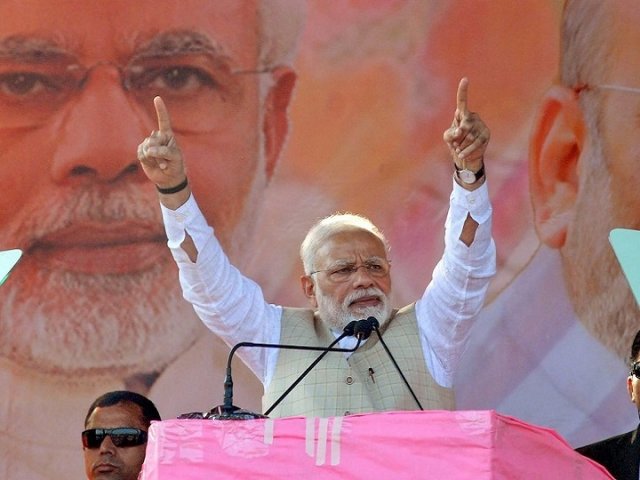
Modi

Photo from : https://www.abplive.in/election/lok-sabha-elections-pm-modis-majority-is-minority-speech-in-wardha-not-a-poll-code-violation-ec-978420

Convince Muslims and Christians that they are first class citizens of India

I can’t think of anything else as more important for this term of Modi government. Modi has already made statements to this effect , but it remains to be seen if he and his party will walk the talk.  Election rhetoric from his party was clearly anti Muslim. BJP does not have a single muslim MP this time – despite Muslim population being about 190M in India. The specific trouble here is that Modi himself usually says (more or less) the right things on India’s secular nature – but when the extreme sections of his fan base resorts to atrocities against minorities, he usually chooses to keep quiet. That is NOT what the leader of the largest democracy should do – he should condemn it loudly, repeatedly and immediately !

Revive the economy, and fix the regulatory framework  

The jobs he promised did not materialize. The note ban did not yield the results he thought it will. And GST rollout – a much needed reform – left a lot to be desired in how it was implemented.

I would expect lowering of income tax will happen in short term (may be in the first budget itself) , in the hopes that the common man will improve consumption (as opposed to save the cash), and that increased spending will result in more jobs (as opposed to corporates just conserving cash or treating it as profit alone).

Tourism is easy money. With its rich history and beautiful natural attractions, its fairly easy to attract tourists to India. But there are many issues that stand in the way – including inconsistent last mile connectivity from airports to the touristy places.

But the larger problem that no government so far seemed to have the stomach to fix is the totally fragmented nature of regulatory structure. There are just too many overlapping regulatory bodies – and that is neither helping common consumers nor companies.

The RBI is governed by law passed in 1934  . RBI’s independence – at least the way I understand it – seems to be a factor of who holds that office at a given point in time. RBI controls the banks – but what about the rest of the financial markets ? Look at the pension type schemes – there is EPF and NPS without clear guidelines on portability.

Income tax is governed by law passed in 1961 . I remember listening to lectures in my Business school days about why this does not fit the times we live in. That was more than 20 years ago, and it has not been modernized. When will we get around to it ? India needs more fairness, consistency and more transparency to be a leading economy.

Prepare India for the long term

National security and Hindutva messaging worked great in Modi’s favor for the elections. I am fairly sure governance will return to more of a middle of the road mode though.

I am not a fan of everything Nehru did in his three terms – but one thing he deserves credit for is about putting in place a vision for the future. He did not just work on problems that were material for any given five year term. Later Rao did the same in his term – and a lot of the goodness we see today are due to governments who looked far into future. Now it is Modi’s turn to aim for long term greatness of the country, and balance it with the goals for next five years he is in office. Given the terrible state that INC is in – he might well have ten years and not five . But all of it will be a huge waste if the seeds are not sown for the future.

What is India’s strategy as automation picks up speed ? Computers will replace some forms of labor – and computers won’t care if those jobs are Hindu jobs, Muslim jobs or Christian jobs. An arms race with Pakistan won’t matter in how we solve this problem. Now is a good time to figure out what our strategy is.

Look at the composition of India’s GDP. More than 50% is services , about 30% is Industrial and Agriculture type stuff makes up the remaining 20%. We are a country with more than a billion people. Is this the mix that is sustainable for the future, or even the present for that matter ? The irony is that even today we refer to services as “tertiary” in this classification !

I am very grateful for the solid education that the Indian system gave me when I grew up there. But the public education system that caters to hundreds of millions of students are in urgent need of modernization. And it needs to be done keeping in mind that the future generations might actually hold several different jobs unlike what the present one does.

All of this will take time – but with the clear majority that Modi has, including the potential to win Rajyasabha majority as well in future, I hope it is used in the most constructive way possible and not wasted in arguing about religious superiority and other low value items.


2019 Election Results In India – Quick Thoughts


I woke up this morning and saw that the BJP led NDA has won another five year term . Before my attention turns to the upcoming World Cup Cricket, I thought I will share a few thoughts

modi-teaser_16ae572a9f0_large

Picture from https://gulfnews.com/world/asia/india/india-election-live-results-2019-bjp-claims-victory-congress-accepts-defeat-1.1558527353661

What separated BJP and INC ?

Granted it is difficult to dislodge incumbents since they have the whole government machinery on their side . But if there ever was a chance to kick out BJP from office, this was it. Demonetization was a failure, GST roll out was terrible , and so on – there was plenty of ammunition to use against BJP this time. And yet – BJP came back with an even bigger margin than last time. What just happened here ?

Amateur leadership from INC

INC had Rahul Gandhi as their face. He is an improved politician now (he is nearly 50 years old and has been at this for a while – so its about time too) with better speech writers, PR teams and all. But he is not a mass appeal leader like Modi . He has no grassroots experience working in the party – he entered politics as a leader, just because he war born in the right family.

I still can’t believe he lost Amethi to Irani. That is ample proof that he is not the right leader for INC any more. This was a safe seat for decades !

Neither does he have good political instincts – clearly shown by the inability to form useful coalitions, or raise strong enough protests against BJP when they faltered. INC is truly the only party that can match BJP in India – but their fascination for dynasty politics is their perpetual undoing. The voting public no longer thinks the Gandhi surname is special and divine . It is high time INC elected a different leader and looked past the Nehru family.

To add injury to insult – neither is Rahul Gandhi a smart political tactician or operator like Amit Shah. BJP did the smart thing by having Modi be the heart and Amit Shah as the head. Rahul might some day get the heart right if INC persists with him – but they need a better match for Amit Shah to have a fighting chance next time.

Nationalism is an effective strategy – and potent when combined with religion 

India had long held a globalist view – mostly thanks to Nehru setting down that path. Modi changed the narrative to a nationalist agenda, much like Trump in USA. He also played hard to convince the majority Hindu community to come together with his hindutva rhetoric. That was BJP’s central message – they could not really ask for votes based on their performance.

Perfect example of nationalism as a winning strategy was how BJP won more seats in Bengal than Trinamool Congress by painting them as soft on illegal immigration from Bangladesh, a primarily muslim neighboring country. BJP has largely negated the influence of regional parties – either by defeating them, or by forming useful alliances with them. Something INC can’t seem to get a handle of these days.

I honestly did not think hindutva will sell to this extent in India – I always thought India was a super secular place when I grew up there. What I clearly did not realize was that I was just projecting what I saw in Kerala (which did not let BJP win a single seat ever – and stayed true to that this time too ) to all over India. I am wrong . India is slowly moving towards Hindu unity.

I have several Christian and Muslim friends in India who are afraid of what BJP might do next. There were isolated incidents of religious intolerance in last five years . So it is reasonable that they feel some anxiety and fear and I wish they did not have to.  Many of them took to social media to tarnish BJP and Modi – some almost did it as a full time hobby. Sadly, it seems to have had the opposite effect. All it seems to have done is that it convinced a lot more neutral Hindus to think BJP’s message may be right after all and they went and voted for BJP.

Kerala stays unique 

My home state of Kerala did not let BJP win a single seat. Every election since independence has seen the incumbents being thrown out and replaced by opposition for the assembly elections . BJP tried to play up the issue of women going to Shabarimala as an attack on Hinduism. They had fielded good candidates in 3-4 seats but all of them lost. I see a lot of commentary now that it is Kerala’s loss in not electing a BJP leader. I think that is not true. Modi needs a strong opposition to keep India democratic and Kerala provides a good part of that to the parliament . Also there are good mature leaders like Tharoor who can work with BJP to get Kerala its fair share. I have a good feeling that BJP might even give a state minister job to Kummanam to make sure they have some chance of cracking open the state in future. We have to wait and see

Communism is officially dead nationally 

Communist party hit an all time low this year winning only one seat in all of India – Alapuzha in Kerala – and that too by a slim margin. They have a failed ideology and cannot seem to find a way to reinvent themselves. They also paid a big prize for their CM’s arrogance in recent times. Outside Kerala – they are largely irrelevant any way by now.

What is next ?

I hope that extreme stances in elections return to a middle of the road approach to actual governance. BJP and NDA will probably get control of both houses of the parliament in a couple of years. I hope they use that majority in a very responsible way and not push for anti democratic or anti secular measures. I am fairly positive that they will govern responsibly as a government . I hope the majority Hindu community continue to live as great friends to their Muslim and Christian fellow citizens as they have done throughout history.

I also hope that INC builds itself back up from the ground and even if they won’t get to power soon – at least they become an effective opposition to BJP and provide the vital checks and balances in our democracy.