Side Projects have been such a blessing !


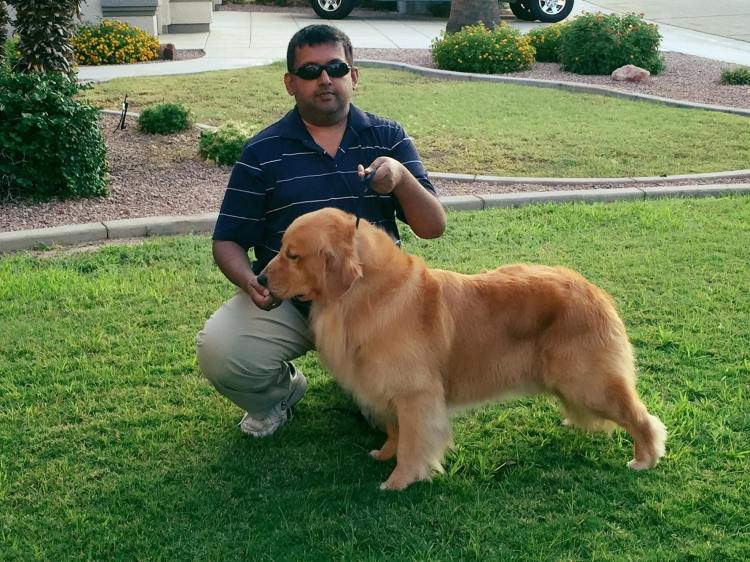
There is nothing that bores me more than repetitive work ! The irony is that I don’t have this problem outside work. I can eat rice three times a day for rest of my life. I can listen to the same set of Ilayaraja songs every day. I have watched Gandhi movie 30+ times , All 7 seasons of West Wing multiple times on Netflix and probably will do it again this Christmas. I love reading the same books over and over every few years. I can spend months perfecting every last bit of synchronization between my dog and me before we compete in dog shows.

But when it comes to work – I cannot stand repetition !

I get bored very quickly. In the early stages of my career, this kind of worked in my favor – I just switched the areas I worked on every year or two and had a fun time picking up new skills and having fun, and in general my career progressed at a fair pace. In hind sight – I was probably taking way too much risk (while doing this on an H1B visa at the time) , and I had a lot of great managers who never stood in my way when I wanted to do something new. But once I was in leadership roles at work – it became abundantly clear that repetition is a good thing for abundance and it is futile to avoid it. On the bright side – I was also quite lucky that people I got to work with mostly loved optimizing repetitive work and gaining efficiencies. But the problem remained that I still could not feel excited to do encores – and since I generally won’t ask my teams to do anything I wont do myself, this started becoming a bloody pain for me.

And that is where side projects became a life saver for me ! They gave me enough variety and stopped repetitive work from distracting me.

The first thing I tried my hand was in blogging – on what was then called SAP Developer Network. And thanks entirely to Marilyn Pratt, I started enjoying it and later branched to having my own personal blog. Only a small % of my blogs talk about technology or work related stuff – and I mostly write to get things off my chest, as a venting mechanism. So I write on the wordpress app on my iPhone for the most part, never proof read or spell check. But thanks to some very loyal and generous readers , it has always been a fulfilling activity. What I realized is that it also benefited my work some how. Many a time, I have landed at airports across the world where someone recognized me and chatted, and I have had clients give me business because they googled me and found my POV on a topic of mutual interest. All this is net goodness – but 500+ blog posts (and podcasts and videos and all), I should say that it is hard to find motivation to write these days. From 2 blogs a week at one point, I barely write one post every other month now.

Ollie and me

Then I picked up my old hobby of dog shows. I was quite successful as a competitor growing up in India and have won my fair share of top awards – and lost more than I care to count. My claim to fame was my german shepherd who could go to our corner store and buy milk by himself. The local news paper and TV channel there had that story covered when I was in college. What I realized in the second round was that my love for dogs is now significantly more than my love for dog shows. Long story short – I did not push myself or my fur kids hard enough and we mostly just hang out and cuddle. Β Again – there were many positives to take to work. One is increased patience and the other is the invaluable lesson that any problem can be solved by breaking it into several smaller problems and solving each and putting it back together. Β And a side “benefit” – having dog hair on your trousers are a great conversation starter with fellow dog lovers at work πŸ™‚

My day job these days is to run a small “hyper-growth” business at IBM ( pretty sure if you name a buzz word, I have it in my portfolio – Cognitive, predictive, IOT..check, check and check) – with more people than I have ever led before, and a target with more zeros than I have ever managed before. There is something new to learn every day, to say the least. Obviously, doing such a business profitably includes a fair mix of repetitive work, and first of a kind work. Thanks to the long plane rides – my coding and math skills are somewhat kept sharpened through all this πŸ™‚

bee school

As luck would have it – I also got the best side project I have ever had in my career. I am the executive sponsor for our consulting school for senior managers – which we lovingly school “The Bee School”. There is nothing more fulfilling than joining hands with our very passionate and skilled Learning and Education team, and a bunch of enthusiastic fellow executives to teach and learn from our next generation of leaders. It has been an eye opening experience for me to see how an education program is designed from ground up, how we train the trainers, how we execute the training and how we learn and adapt quickly. I am seriously thinking of being a full time educator now. The best part of the week we spend with a hundred senior managers is the Cognitive hackathon night where people who have no prior coding background build a virtual agent using Watson and realizing how easy modern technology is , and how much value it adds to clients ! I have to thank my “big boss” Β Ismail Amla for the opportunity .

My latest side project is to build up a garden – flowers, veggies , anything that grows. The last time I did this was when I was in grade school. What makes this a fun project is that I live in AZ, where the summer temperature is a cool 100F to 120F. I have a willing co-conspirator in my mother in law who has a beautiful garden in India. My core design principle was “hyper growth” – so I had to do my research on what plants will thrive in our climate, which ones will yield flowers and fruit the fastest, and how to build for some future scale in case this actually works.

We already have some success – yesterday we ate the first egg plant and tomato from the garden . And there are about 20 different shades of hibiscus flowers in the yard. The ROI for these vegetables is now something like every $5 of veggies cost about $500 ! But the sheer satisfaction of seeing “hyper-growth” is priceless πŸ™‚

There are some good lessons I could potentially take to my work – 1. Time spent in upfront research saves a lot of rework ( The few plants we lost in the process were all mistakes that we could have avoided if we took time to read more and ask around a bit more). 2. Automation is a good thing and something you need to put in place upfront ( everything on timed automatic irrigation now). 3. You cannot just trust process and automation if you want solid results ( Till plants take root, you need to water extra , give them support, remove weeds and generally treat them like a little baby πŸ™‚ )

The current gardening project should keep me going for a little . But I am already thinking of my next side project – and one idea is to buy a German Shepherd puppy and train for Schutzhund/IPO. I am inspired by 7 year old Samantha – watch this video and see for yourself. Or perhaps start writing my book – The Matrix Dysfunction !


SapphireNow 2017 – My 2 cents


First off – thanks to SAP for having me at the event as a blogger. In my day job, I no longer work on SAP technologies closely. But most of the clients I have are SAP shops and often talk to me about SAP given my heritage. Sapphirenow keynotes and executive meetings with the board members were enlightening for me. Here is my quick commentary.

Hana – done and dusted ?

As I walked into the show floor, the first thing that caught my attention was that there were hardly any signs for Hana. After the last 6 years of Hana overdose, I was pleasantly surprised to see this. I have always maintained that success of Hana will be when SAP does not explicitly talk about it, and it just becomes a part of everything they do. To be clear – Hana is not a part of everything they do quite yet – most of their customers are still not on Hana, but SAP probably feels confident that the tipping point on adoption has happened and momentum will keep building. Congrats to all my friends who worked tirelessly on it.

Indirect Access – SAP heard the community loud and clear !

Bill McDermott needs to be commended for taking on the indirect access issue heads on in his opening keynote. Without that, the whole empathy thing would have sounded hollow. Now the proof of the pudding is about SAP following through and changing the perception in the ecosystem. I heard it loud and clear from Bill in a private meeting that he is committed to making it happen and I trust him.

All hail SAP Leonardo – just don’t ask me what it exactly is πŸ™‚

This Sapphire was all about SAP Leonardo ! Unfortunately, I cannot quite explain what it really is under the hood. From the slides I saw, it seemed like everything but the kitchen sink was thrown into this package – analytics, block chain, cloud…. . To be honest, it seemed like SAP did not have the time to think through a crisp message before the event. I am sure this will be a lot better by TechEd. I should say – while admittedly not being a marketer myself – I doubt SAP will keep this name “Leonardo” for long. It sounds like a cool internal project name , but I doubt this will catch widespread imagination. I heard this from several people on the show floor too, including several of SAP’s largest customers.

SAP loves partners !


The keynotes were totally partner friendly – We had senior execs from Dell, intel, Google, IBM et al show up on stage at various points. But it was rather light on customers. Perhaps this was a conscious decision given the customers would have wanted to talk about their existing (boring?) – mostly on premises –  systems, where as SAP wanted to position their future with cloud and AI and all that. I trust the balance will tilt towards customers as pilot projects for Leonardo get completed. While I have no idea of commercial impact, the Hana startup program was a good thing for Hana adoption. I was surprised at not seeing it being repurposed to get Leonardo a similar lift. Perhaps more at Teched?

What is next for UI and API in the machine to machine world?

SAP did an exceptionally good job with UI with Fiori etc – and Sam Yen and team should be incredibly proud of that. It was also an expensive effort to get SAP to look cool.  Now with Bernd and Hasso painting the vision of automation, ML etc – I would love to hear what is the next evolution of SAP UI. When most of the back office and factory processes are automated – there won’t be human beings keying in things into a beautiful screen for most of the processes. And for the few screens that do remain in future, screens cannot be static either – and will need to learn user behavior and adapt. Just looking at how many screens get used today and making decisions based on it might not be fit for future. I have a similar question on APIs. Future is mostly about machine to machine interactions and AI. The way APIs are designed are not fit for this kind of future – machines for example do not need anything more than a binary protocol to talk to each other. Sapphire is a business setting – so perhaps these things will find a place at next teched.

Time to rethink demos a bit ?


I will just make two points on keynote demos. Putting sensors in drills and showing how it works in real time on a live stage is something I applaud. What I thought was less impressive was the articulation of the business case. If I am renting a drill – the renting company cannot give that drill to anyone else. So – what is the point of charging per hole drilled ? What if I rent a drill, keep it for a week and drill 2 holes ? Its not a logical business model and it detracts the people watching it. I hope SAP just finds a real life customer case to demo next time.

From the beginning of time, SAP has demonstrated dashboards. I love dashboards – and the ones showed this time were visually impactful too – and maybe had great ML behind the scenes. It just did not show that way – I think its time SAP moved to some other way of making the message hit home.

SAP makes a much needed entry into AI

Hana brought the speed and technical simplification SAP needed. Now SAP is taking the next logical step to make applications smarter. SAP leaders I met here were all realistic on the effort and skills needed to make this happen. Ariba choosing Watson as its cognitive engine, and Google Tensorflow being endorsed in a big way by SAP are all signs that SAP clearly understands that AI is an ecosystem play.  In my mind – SAP can’t get the skills and IP needed to keep up with this market without a string of acquisitions. SAP has always had a strong services ecosystem around it for decades – but they historically have been low key on role of services in creating value. The future of applications might not all be pre packaged like how ERP traditionally worked – and the significant need for domain expertise etc is readily acknowledged now. 


The one aspect where I have some pushback for SAP is the inside out view that AI sits inside SAP systems. While there are valid scenarios like invoice and payment matching where all data sits inside SAP – it is not realistic that a company can model real world with just SAP data. Again – I think its just a matter of time for the vision to mature.

It was fantastic being here – and catching up with old friends and making new ones. It was also fascinating meeting several people I have known only on social media – thanks for introducing yourselves ! Till next year !

IT Services industry – time for empty talk is over !


Every day I read at least one article that talks about Indian IT companies planning to hire several thousand people locally in US , and multiple articles about digital transformation disrupting multiple industries. What is abundantly clear to me is that jobs and careers as we have known them will get disrupted in an unpleasant way and society will have to pay a big price to pay . 

Global IT services business was built on “your mess for less” philosophy, not on advisory and consulting type business . 

If you, the client,need to spend a million dollars to process invoices or make collections  ,then  I – the service provider – have a combination of cheaper labor ,infrastructure  scale and technology that lets me do it for cheaper . So I will do it for cheaper and give you a better deal while still keeping a healthy margin for myself . And then I will keep optimizing my process and technology so that I make better margins – some of which I will pass on to you too . Now that you love the model for invoice processing , I can also make this work for you in say maintaining your ERP system . I will just hire more people , and use the learning from the invoice process work and keep making my business better while you have a healthy cut on your costs too . 

The differentiation became one of price charged by the provider – and hence buyers just needed to compare rate cards for the most part to make a determination . The last couple of decades went along this way – with minor differences . There came a point where low price alone wasn’t differentiating enough – so some kind of price + value add was needed to keep this motion going . That came in the way of pricing for outcomes , rebadging employees , adding some freebies like proof of concept work , etc . 

What didn’t change was that success was still tied largely to headcount – how many people could the customer take off their books , and how many the provider could add . Even if the contracts were outcome based , the costs were mostly head count based . This model could adapt to slow changing technology – but not for massive shifts in technology . For example – when BPM came along a decade ago, a ten member team probably got shifted to an eight member team . But when AI becomes mainstream – with visual recognition , pattern matching and so on – we may only need 2 people to do that job , or perhaps none ! The current model is not built for that kind of disruption – and companies and people will both have a price to pay .
I look at “we will hire thousands of employees in US” as mostly (not solely) a PR exercise . While protectionism will very slightly delay the inevitable – the job losses in US and elsewhere won’t be because India and China have cheaper labor . It will be because automation will take over routine repeatable jobs , and there just won’t be enough people with the skills needed for the higher end jobs given we have not prepared as a society and as an industry for such a tipping point . 

These higher end jobs unfortunately cannot be done in near future in India ( not sure about other countries but can’t be that different ) because the quality of the mass produced engineers are not anywhere close to the levels needed for taking these jobs on scale .  Revamping the education system world wide should be priority one – and this can’t be done via formal education system alone . 

It will be a rather weird world ahead of us till we hit the next equilibrium point . Job losses will not be because there aren’t enough jobs that need to be filled  – it will be because we don’t have enough people with the new skills . 

Automation will light up the industry candle on both ends – clients will automate a lot of their work , and service providers will automate a lot of their work . This affects all levels of current services organization hierarchy . For the most part , I expect the fundamental services business model to change . Just a few examples in no particular order to make the point

1. Services companies became large and profitable by optimizing large resource pools – like a thousand ETL programmers to support a hundred  projects . Large SI companies historically did not need too many people with multiple skills – so it was quite possible to be a top class ETL programmer without ever needing data modeling skills for example . When the need changes to micro specialization by client , and smaller and shorter projects , it no longer makes it possible to optimize this way . So I expect the large service providers to be more of general contractors and the actual skills to be provided by individuals and smaller companies . Some very niche skills alone might get housed in these larger SIs – and the differentiation will mostly be IP based 

2. Neither clients nor providers will need a lot of managers purely for administrative reasons like reporting , aggregating etc . I do expect project management to become even more important though . 

3. When robots take some of the the jobs of humans – HR will need skills to integrate human machine interactions . While it might sound funny today , I do expect people with “robot recruitment expert” in future πŸ™‚ . Finance will need to deal with the newtradeoffs between balance sheet and P&L when robotics become mainstream. Similarly for a service provider differentiating primarily on IP – the CFO will start watching balance sheet a whole lot more than she does today . 

4. For near term at least – countries like India are better off transitioning to products from services . But in the mid to long term , there won’t be much of a difference between what is a product and what is a service . Again , the skill requirements and business model changes are significant and fairly disruptive 

5. The scope of services provided will fundamentally change . As clients automate their plants and further increase the complexity of their supply chain and talent mix – how many services companies can help them on the front line ? The “manufacturing vertical” of most services firms today deal with mostly back office functionality of manufacturing companies – that won’t be very useful in just a couple of years 

6. Consultants , Advisors and buyers’ agents will need a lot more depth than the high level digital transformation power points, and rate card benchmarks to earn their keep . The level of knowledge needed to implement actual robotics in a company is not the same as “here are the 7 steps” on a power point chart you can impress a senior exec with today.

You get the idea – it’s not just the line employees who will get impacted , the entire length and breadth of the services ecosystem will get disrupted . And given the high spending power of this segment in the society and economy at large – the impact will be wide spread . In other words, the time to act has probably passed us already and we better start at least now . 

The first step to change is acknowledging we have a problem – so let’s get that over with and start the creative destruction and the rebuild . The onus is on each of us as individuals to reskill ourselves for the needs of tomorrow . And the onus is on each leader to join hands with each other to collectively define and implement the future of our industry – we cannot solve this one company at a time. This is not the time for empty promises and bravado filled PR  and small ring fenced teams that do “innovation” – we need meaningful action at scale . Let’s go !