Balancing the focus on outcomes and enjoying the process


I have been a coffee drinker from the time I was a five year old . I grew up with my paternal grandparents ( Dad and mom stayed in a distant town where the factory he worked for was situated and that place didn’t have good schools ) who were both coffee drinkers and I would get a small cup too when they had theirs . Kerala is famous for tea – and strangely I don’t like tea . Everyone else in my family enjoys tea except me 🙂

The very first trip to US – the ONLY food item I packed was a big bottle of BRU instant coffee . I also remember my excitement and relief finding BRU in the local Indian store in Colorado Springs !

I value efficiency a lot – and BRU instant coffee with milk was the easiest solution at home . A mug of milk takes 90 seconds in the microwave to heat up and another ten seconds , I can have a great tasting coffee . Outside my home – Starbucks cappuccino is where I end up spending all my disposable income .

I have always had great espresso makers . But the time it takes to get a coffee and the clean up afterwards essentially meant they stayed in the garage shelf more than on kitchen counter . Few years back – I shifted to a Nespresso machine . While definitely more expensive and not very sustainable – it was a great solution to having high quality coffee in thirty seconds .

A little while ago, I stopped having milk altogether . And this posed a problem – if I drank big mugs of coffee throughout the day, the acidity in my tummy took away the pleasure of coffee . So I switched almost exclusively to espressos . I really needed a small quantity of intense flavor and it will last me several hours . Two a day is plenty for most days . But for that – Nespresso wasn’t cutting it .

So with great reluctance – I dusted off the espresso machine and researched good beans and started grinding and making my own from scratch . It does take a lot more than 2 mins to get a perfect shot – and some days the magic doesn’t happen and I try experimenting some more .

The process – to my utter surprise – proved to be rather therapeutic . I no longer know what I enjoy more – the process of making a great espresso and the experiments to make it a little better the next time , or the resulting drink itself !

It is an interesting parallel to how my views on work have evolved similarly over time as well .

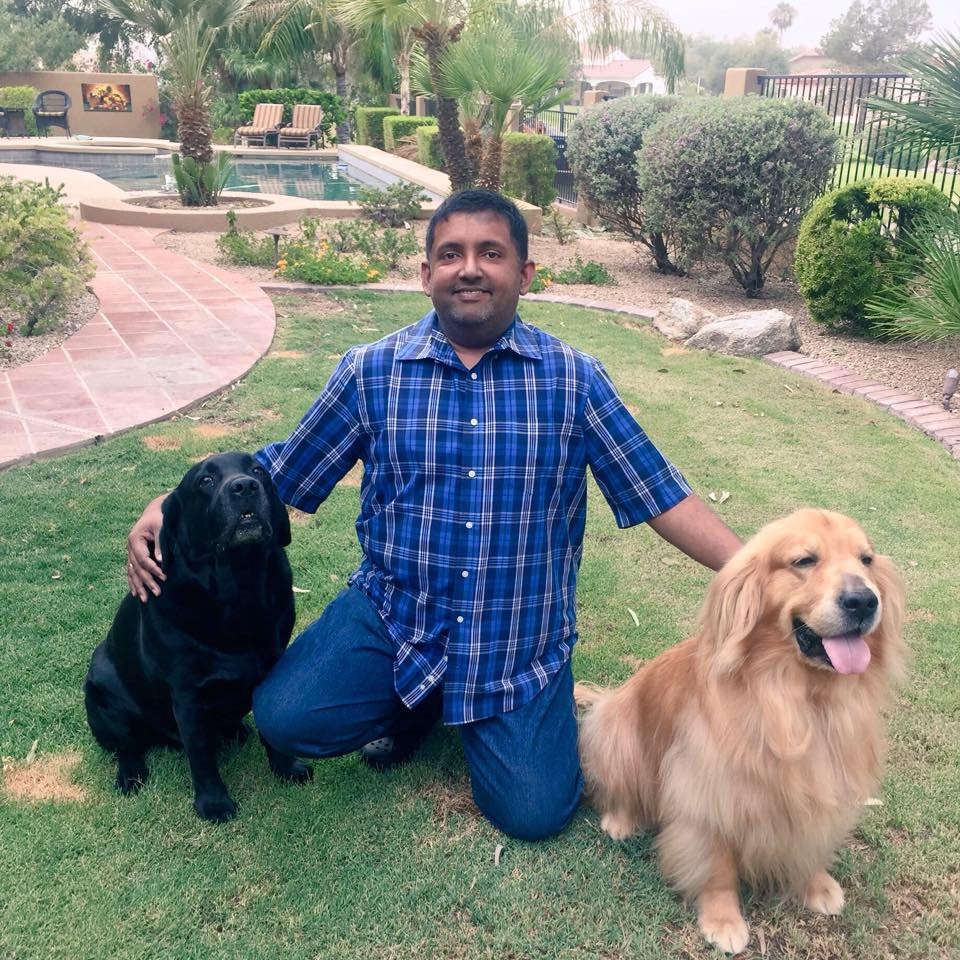
I used to compete in Dog shows actively while I was in college . It was not easy to find time to train my dog and also not let my grades drop – so I micro optimized both the study routine and the training routine . I was fairly successful from an outcome point of view – my dog won regularly and I had decent grades . But honestly I can’t look back and say I enjoyed the learning experience very much on either side .

As a young engineer – I only cared about making sure I could deliver high quality code within time and budget . My enjoyment was more about typing a few hundred lines of code and see it compile the first time itself . Someone created the rules and I improved my skills at optimizing within those boundaries and delivering what I was asked to .

By the time I was a senior manager – I had a little bit more confidence in redefining problems before solving them . The one I remember the most is convincing a finance leader at my client that she didn’t need 150 reports that her team scoped about and can get everything she needs with just 70 by redefining the problem to a certain business outcome that will “move the needle” . And then I had to convince my boss that we will make a lot less money doing the lesser scope of work. Both worked out fine and over a long period of time we earned good business from that client .

Looking back, I think the next evolution was in encouraging my team to redefine the problems and then optimizing the solutions while I try to spend more of my own time trying to gaze a little farther into future and preparing for what is yet to come . I minimize my intervention to what business schools call “management by exception” – and even then only to the extent of helping them think through. I guess that’s where I am now – with of course plenty to improve on finding the right balance .

My biggest learning from all this is the importance of operational excellence . If the routine blocking and tackling is not well taken care of – your ability to expand your horizon becomes rather limited . I have done more than my fair share of whining on operational aspects of executive roles – but I no longer do it with the kind of zeal I used to 🙂 .

This is why I call coffee as “liquid wisdom” 🙂

Watching the second CEO transition at IBM


Yesterday evening I had just finished a conference call when my phone lit up with slack messages , WhatsApp messages and calls all together about Arvind Krishna being appointed as our new CEO . Obviously a big moment for all of us . This is the second time I have watched a CEO transition here, and there are some good lessons I learned watching our leaders in action – albeit from considerable distance .

I was an account partner at a semiconductor client in Northern California in GBS in 2012 when Ginni became CEO of IBM . There are three things I remember from that time .

1. The CIO of the company telling me “this is the best CEO transition I have seen anywhere”

2. IBM stock price was around $210 or so . I had put 10% of my paycheck every month since I joined (when stock was around $70) in ESPP to buy the stock and I sold everything I had and paid off the mortgage of our home

3. My mentor, John Leffler, telling me about how accessible Ginni is to line leadership

I did not know Ginni at all when she became our CEO . Nevertheless, I sent her a short congratulatory email about 10 minutes after I saw the announcement email . To my utter surprise – she responded in about 2 mins thanking me . I showed that to everyone in the team and we were all thrilled that we have a new leader who would respond so fast to someone a hundred levels below her in the hierarchy 🙂

John later told me that Ginni actually knew a little about me from the SAP CEOs McDermott and Snabe ( they knew me from the SAP Mentor and blogger programs ) , and had asked him about me .

In any case – this one real time response to my note had a big impact on me. I am very prompt in my email and phone responses as well and a lot of that can be traced back to me thinking “If Ginni who has a thousand times harder job than me can be so responsive, I have no excuse to slack” . I have to add that Bill McDermott , CEO of ServiceNow ( and ex-SAP CEO ) is exactly this way too . Every email and call gets returned quickly .

It certainly couldn’t have been easy for Ginni being the CEO for 8 years facing constant criticism from all around . I absolutely admire how Ginni stayed so positive throughout this time and continued to make big bold bets for the future on research , cloud, quantum etc . The largest business I have ever run is a tiny fraction of what Ginni runs . Even at this tiny level – it’s hard to balance short term vs long term and it’s easy to get criticized whatever trade off you make . I can only imagine – barely – what she must go through routinely at the scale of IBM and with constant comparisons to others. I can’t honestly say I handle pressure with her level of ease – but seeing how she does it has certainly helped me learn how to handle it better .

I have only met her directly very few times . One thing I have always noticed is that she zooms into what is important very quickly without wasting any time. She also doesn’t hold back on feedback – good or bad . In one CEO level meeting at a client – she took me aside and asked about my family and what my daughter was learning at school these days . She was happy to hear about her interest in math and computer programming and asked me about how I thought IBM was helping shape the next generation of technical talent in schools . And an hour later she gave my boss and me some pretty hard hitting feedback on what we should improve on . Again, this was something I could learn from on the balance a leader needs to develop .

From time to time, I would get the pleasure of some quick feedback from her on my blog as well – which of course is major bragging rights . This one was about the future of software on New Year’s Eve .

And as of yesterday we have a new CEO-elect in Arvind Krishna , and a new President in Jim Whitehurst .

Right off the bat – I (and many others) cheered loudly when I heard a hard core technologist was chosen as our new leader (and especially sweet for immigrants like me to see it’s a person of Indian origin) .

When I joined IBM in 2006 , Arvind was already quite well known as a visionary technologist and he has been taking on progressively more senior and impactful roles . I have interacted with him only a handful of times – mostly when I led the consulting business in NA for AI, analytics and IOT . He is the most down to earth leader one can meet – and totally stays away from hype and yet communicates the value of technology so effectively. Something I admire and want to get better at myself !

Twenty years ago or so when I landed in USA as a young engineer, there were not a lot of people of Indian origin in senior leadership roles in tech companies that I could look up to . And now we have immigrant engineers from India as CEOs of IBM, Google , Microsoft , Adobe ! It is a great moment of pride as an American of Indian origin (and an engineer) myself – especially since not that long ago I couldn’t have even dreamt of such a scenario . I was not the only one going through this emotion – so many of us were calling and messaging each other well into the night . What a great testament to the education system in India , and what a great example of America promoting top talent with no bias based on the country they were born !

When I saw the news yesterday on a slack channel, I sent a quick note to Ginni – and the only request I had was for her to write a book on her time in IBM . I sure hope she does and there will be a lot for us to learn from it !

Good luck Arvind and Jim ! All of us are cheering for you as you lead us into the future .

Usual disclaimer : As always, these are purely my personal thoughts and not that of IBM . I am not an IBM spokesperson . I do own IBM stock .

What the heck is strategy ?


I don’t know what is more difficult to get consensus on a definition – “meaning of life” or “strategy” . And I am only partly kidding here 🙂

Vast majority of the literature and talks on strategy are about what it is not , as opposed to what it really is . This was true when I was in business school a couple of decades ago , and it’s still true in the work place debates today . Recently I attended some leadership training at HBS and apparently Professors still love to debate what it is not !

I don’t deny that I enjoy these debates – but with a business to run, I also need simple definitions to do something with it . The reason I am thinking about it one more time is because I have an “all hands” call coming up with my global team in a few days and as it happens every year – I am challenging everything one more time just to make sure I set the team on a good path to success .

So here is how I look at strategy

1. Strategy is a way to get to a set of goals under uncertain conditions and limited resources within a certain period of time

2. It can only be defined at a high level given the uncertainty , and there needs to be a plan for known trade offs

3. The plan to execute on it consequently need to be constantly refined as you learn more over time

4. It needs to be defined at the highest level of an organization since a good strategy needs a lot of decisions on allocation of scarce resources , the goals itself will need to be questioned , and the result of those decisions has to serve as a compass (as opposed to a map) for the rest of the team as they execute on it

5. It should leave plenty of room to improvise during execution.

The goals are fairly straight forward for the business I lead . Where I need to temper my enthusiasm is how many of those goals can I map to a bottoms up plan . It’s very easy to make too many assumptions and become over confident in attaining those goals – but that would be ignoring the simple idea that there is no strategy if there is no uncertainty ! The trick is to minimize uncertainty instead of eliminating it .

Then there is the constraint of limited resources . I have swung on either extremes of “constraints are good” VS “unconstrained is good” over the years . These days I am a believer that it’s best to acknowledge constraints right upfront – but then start challenging them from first principles to see if they are as real as they appear . When we don’t acknowledge real constraints , we end up saying ridiculous things like “it was a great strategy, but execution failed us”.

All strategies have an expiration date and I realize that over time – the shelf life is becoming shorter . What seems to work for me is an annual overhaul with quarterly tweaks . If operational results trend the wrong way – I don’t wait for the next year to overhaul the strategy though 🙂

The easiest way to communicate a strategy for me is in the form of a plan . Too high level and it gives the feeling of a “slogan on a banner” which gets you not a lot more than eye rolls . Too much detail and it gets tedious for everyone . So I run it by a few people to iterate and get it to a decent enough shape . No magic bullets have been found so far !

Iterations come in all sizes and are triggered by multiple factors . The most common reason is the variance during execution. But there could be really big factors like the economy going into a recession . The key here is to keep an eye for detail on operations, while also scanning the environment for changes .

Zooming in and out constantly takes a lot of time and energy – and this is one of the many reasons why you should constantly grow more leaders in your team. The more (and better) leaders you groom – the more you can focus yourself on fewer high impact decisions .

The last point I want to make here is on leaving room for everyone to make decisions during execution . There is no creativity in following explicit and prescriptive directions all the time . This is why I like to think of my job as providing a compass and not a map . Unless your team develops skills to make their own plans – and intelligently change them as required along the way – they will not develop as leaders !