There is nothing that bores me more than repetitive work ! The irony is that I don’t have this problem outside work. I can eat rice three times a day for rest of my life. I can listen to the same set of Ilayaraja songs every day. I have watched Gandhi movie 30+ times , All 7 seasons of West Wing multiple times on Netflix and probably will do it again this Christmas. I love reading the same books over and over every few years. I can spend months perfecting every last bit of synchronization between my dog and me before we compete in dog shows.
But when it comes to work – I cannot stand repetition !
I get bored very quickly. In the early stages of my career, this kind of worked in my favor – I just switched the areas I worked on every year or two and had a fun time picking up new skills and having fun, and in general my career progressed at a fair pace. In hind sight – I was probably taking way too much risk (while doing this on an H1B visa at the time) , and I had a lot of great managers who never stood in my way when I wanted to do something new. But once I was in leadership roles at work – it became abundantly clear that repetition is a good thing for abundance and it is futile to avoid it. On the bright side – I was also quite lucky that people I got to work with mostly loved optimizing repetitive work and gaining efficiencies. But the problem remained that I still could not feel excited to do encores – and since I generally won’t ask my teams to do anything I wont do myself, this started becoming a bloody pain for me.
And that is where side projects became a life saver for me ! They gave me enough variety and stopped repetitive work from distracting me.
The first thing I tried my hand was in blogging – on what was then called SAP Developer Network. And thanks entirely to Marilyn Pratt, I started enjoying it and later branched to having my own personal blog. Only a small % of my blogs talk about technology or work related stuff – and I mostly write to get things off my chest, as a venting mechanism. So I write on the wordpress app on my iPhone for the most part, never proof read or spell check. But thanks to some very loyal and generous readers , it has always been a fulfilling activity. What I realized is that it also benefited my work some how. Many a time, I have landed at airports across the world where someone recognized me and chatted, and I have had clients give me business because they googled me and found my POV on a topic of mutual interest. All this is net goodness – but 500+ blog posts (and podcasts and videos and all), I should say that it is hard to find motivation to write these days. From 2 blogs a week at one point, I barely write one post every other month now.
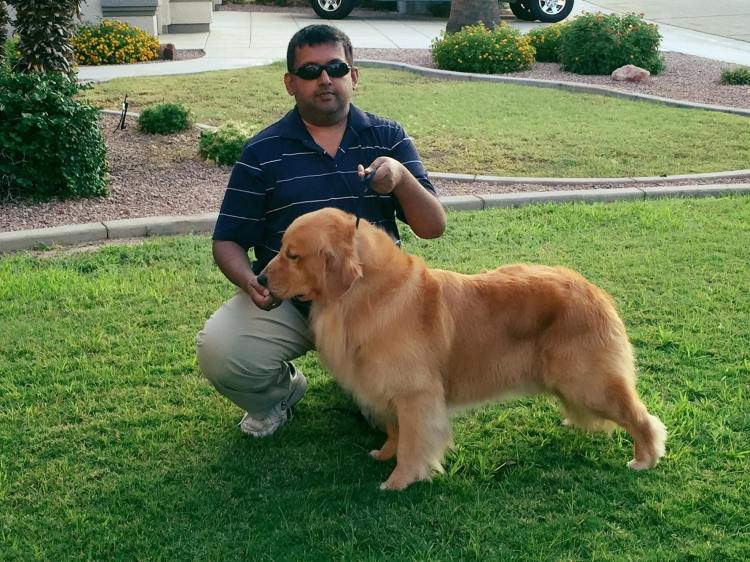
Then I picked up my old hobby of dog shows. I was quite successful as a competitor growing up in India and have won my fair share of top awards – and lost more than I care to count. My claim to fame was my german shepherd who could go to our corner store and buy milk by himself. The local news paper and TV channel there had that story covered when I was in college. What I realized in the second round was that my love for dogs is now significantly more than my love for dog shows. Long story short – I did not push myself or my fur kids hard enough and we mostly just hang out and cuddle. Again – there were many positives to take to work. One is increased patience and the other is the invaluable lesson that any problem can be solved by breaking it into several smaller problems and solving each and putting it back together. And a side “benefit” – having dog hair on your trousers are a great conversation starter with fellow dog lovers at work 🙂
My day job these days is to run a small “hyper-growth” business at IBM ( pretty sure if you name a buzz word, I have it in my portfolio – Cognitive, predictive, IOT..check, check and check) – with more people than I have ever led before, and a target with more zeros than I have ever managed before. There is something new to learn every day, to say the least. Obviously, doing such a business profitably includes a fair mix of repetitive work, and first of a kind work. Thanks to the long plane rides – my coding and math skills are somewhat kept sharpened through all this 🙂

As luck would have it – I also got the best side project I have ever had in my career. I am the executive sponsor for our consulting school for senior managers – which we lovingly school “The Bee School”. There is nothing more fulfilling than joining hands with our very passionate and skilled Learning and Education team, and a bunch of enthusiastic fellow executives to teach and learn from our next generation of leaders. It has been an eye opening experience for me to see how an education program is designed from ground up, how we train the trainers, how we execute the training and how we learn and adapt quickly. I am seriously thinking of being a full time educator now. The best part of the week we spend with a hundred senior managers is the Cognitive hackathon night where people who have no prior coding background build a virtual agent using Watson and realizing how easy modern technology is , and how much value it adds to clients ! I have to thank my “big boss” Ismail Amla for the opportunity .
My latest side project is to build up a garden – flowers, veggies , anything that grows. The last time I did this was when I was in grade school. What makes this a fun project is that I live in AZ, where the summer temperature is a cool 100F to 120F. I have a willing co-conspirator in my mother in law who has a beautiful garden in India. My core design principle was “hyper growth” – so I had to do my research on what plants will thrive in our climate, which ones will yield flowers and fruit the fastest, and how to build for some future scale in case this actually works.


We already have some success – yesterday we ate the first egg plant and tomato from the garden . And there are about 20 different shades of hibiscus flowers in the yard. The ROI for these vegetables is now something like every $5 of veggies cost about $500 ! But the sheer satisfaction of seeing “hyper-growth” is priceless 🙂
There are some good lessons I could potentially take to my work – 1. Time spent in upfront research saves a lot of rework ( The few plants we lost in the process were all mistakes that we could have avoided if we took time to read more and ask around a bit more). 2. Automation is a good thing and something you need to put in place upfront ( everything on timed automatic irrigation now). 3. You cannot just trust process and automation if you want solid results ( Till plants take root, you need to water extra , give them support, remove weeds and generally treat them like a little baby 🙂 )
The current gardening project should keep me going for a little . But I am already thinking of my next side project – and one idea is to buy a German Shepherd puppy and train for Schutzhund/IPO. I am inspired by 7 year old Samantha – watch this video and see for yourself. Or perhaps start writing my book – The Matrix Dysfunction !