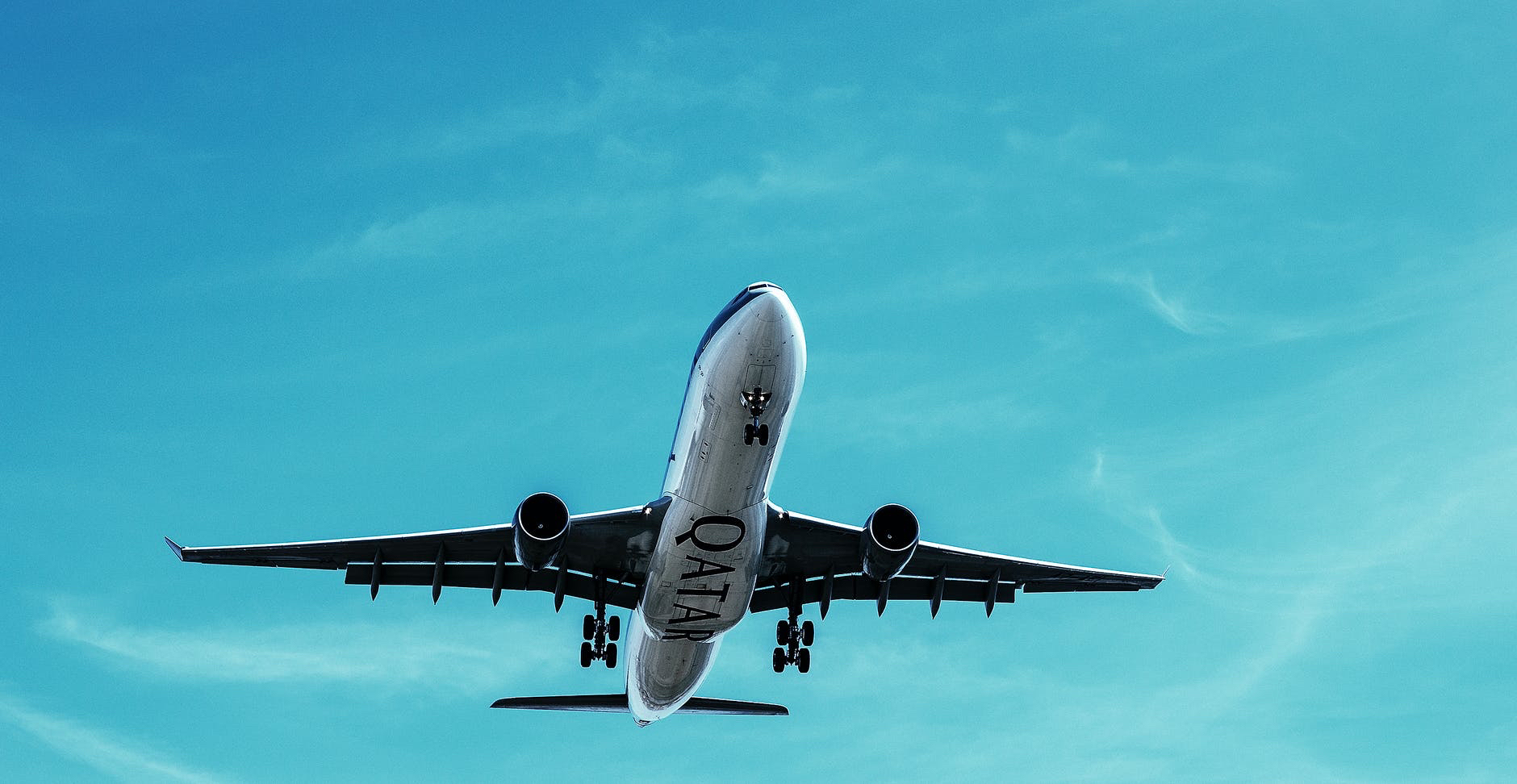
Future Of Business Travel – A Road warrior’s personal take


Like many other professionals in my line of work, I have paid my dues in terms of million miler airline status , decades of top tier hotel loyalty and rental car loyalty status etc . I got to live and work in three continents thanks to this job – and have enjoyed getting to know different cultures and expanding my skills and my world view . I have enjoyed better vacations with my family because of the loyalty rewards as well . For more than twenty years, I have taken business travel for granted and rarely given it a second thought . I often answer “at a Friendly Airport near you” when people ask me “where are you based?” 🙂

The last time I was in a plane was in early March this year when I returned from India after my father’s funeral . The honest truth is that I don’t miss business travel today . My entire global team – more than a thousand people – took about two days to become fully remote . We have been productive and now are quite comfortable running our business with webex , mural , Trello , slack and so on .

So why did I start thinking about business travel again ? Simply because I have started to realize that meeting people on webex is not a long term sustainable strategy for growing relationships – be in personal or professional . Also, while it is possible to build on existing relationships – it’s extremely difficult to build new relationships in a remote fashion . Efficiency can be managed somehow when we are remote – but not efficacy !

What is behind my reluctance to travel ? It’s primarily the fear of getting COVID-19 . There are secondary worries of course about social unrest , cleanliness , availability of food and so on given the lack of consistency of guidelines across US and the world on reopening, access to medical facilities should I need it in a hurry etc .

1. Zero contact everywhere I go

A good start will be to make sure everything about my travel experience becomes digital .

Airlines are good about this generally with boarding passes and occasionally baggage tags . But the physical agents and kiosks are still required at the slightest deviation from the happy flow . I don’t want to be in a crowd at the customer service kiosk , or go ask a gate agent for status or anything of that nature . I would love for airlines employees and me all to have mobile to mobile communication for vast majority of the time .

Hotels are inconsistent about digital keys – many of them still don’t offer it . I would like them to hurry . Check in and checkout have no good reason for me to ever meet an agent in person .

I don’t want to swipe my credit card anywhere either . Why do we need a physical card in this day and age ?

2. Common digital identity for all my travel

I don’t want the TSA agent to pickup my passport or driver’s license . I also don’t want the hotel to need to check that in person . There should be some machine to machine way of handling this . Technology really cannot be the bottleneck here . Privacy is absolutely a concern for sure – and it should be based on an opt-in basis .

Even without the COVID concerns – why do I need to have separate profiles and identity kept with each transportation provider ? Even within One world alliance – I often have to identify myself repeatedly if I am traveling using more than one airline .

3. A “Trust and Transparency score” I can search and rank by

Some airlines do not give away their middle seats and some do . Different hotels, rental car companies have different cleaning schedules . Some hotels serve food and others don’t . I need to know all this – and probably more – before I book my travel . This needs some kind of a score or tag that I can search providers by and choose the ones I am comfortable with using .

Travel industry essentially needs to make me feel really comfortable – and earn my trust with their transparency – before I travel again . I absolutely want that industry thriving again and I think business travel returning to growth is a big part of such recovery .

4. An expert digital travel advisor that follows me around on my phone

Things are changing by the minute and I don’t have the time and energy to stay on top of it when I am on the road . I need a digital friend to stay on top of my travel for me – warning me if my risk exposure is changing based on my location at any point (is meeting at a location where overnight there was a surge in Covid cases) , helping me change travel plans (was there a curfew announced and do I need to reschedule) with low friction , answering questions (where is the closest hospital with ICU capacity open) etc . I also want my family to have access to some of this information when I am on the road .

In my current estimate – there is no great need for me to travel for rest of this year unless there is some big unknown exception that arises . But I am almost certain that I will need to travel beyond that horizon for work and probably also to visit my mother in INDIA . I truly hope the travel industry will do everything they can to transform themselves and earn my loyalty again .

Emotions at Work


Very interesting question early in the morning today from a younger colleague – “How do you keep away emotions from work ?” . I thought it is worth expanding on the point of view I explained to her on the phone.

Photo by Burst on Pexels.com

I have often been told that we should not be emotional and instead we should be objective at work. That is rarely possible in real life in most scenarios – at least for me. So the closest to a good option in my mind is to manage these emotions as a “portfolio” so that I can survive and thrive without unnatural tactics. Before you ask me (since my colleague asked me today morning) – I will tell you that I do not practice breathing exercises or Yoga or chanting . Those are all probably good things to do – just that I have no first hand thoughts to offer.

So here we go .

Fear ,Anger and Courage are the ones that we need to confront the most given the consequences can be terrible. I feel both at times – and the way I control it is by thinking of the worst case. Am I going to lose a deal ? Lose a talented colleague from my team ? Can I fix this now or later? etc. Almost every single time I realize that the worst case is something I can mitigate. That is how I channelize these two emotions – I often convert them to courage to act.

Sadness and Joy – I do not hide Joy. When I am happy people know it. When I am sad – which is not often – people close to me can read it. On work, I feel sad most often when someone who should know better does a less than stellar job. I feel sad more often than I feel angry. And generally when the person realizes it – it helps them course correct.

Disgust , Surprise and Anticipation – Thankfully there are only two or three incidents in my entire career where I was truly disgusted. It just taught me to not work with certain kind of people. Surprise is actually a beautiful feeling in personal life – but unfortunately I am wired in a way that I do everything to avoid surprises at work. I try hard to not surprise anyone myself. I am not sure if this is good or bad – but the dislike for surprises is something I have to live with. I do a lot of anticipation – in the form of plan A/B/C . It is an intellectual pursuit that makes me feel good most of the time.

Trust and Respect – This is the ideal state of operation in my mind. Being liked at work or being feared at work are both long term problems for a leader. Obviously between the two – being liked is the pleasant and easier alternative . The world of business is not fair and often involves decisions that are hard on the people taking those and communicating it to others. If your objective is to be liked – you will be miserable when a hard decision needs to be taken, and others will feel a big let down. If you operate with fear as primary tactic – you will never have a motivated team. So the only real option is to aim for trust and respect as your operating parameters and help everyone get to a frame of mind that you will be fair in all cases.

Kindness and cruelty – This is pretty black and white . I heavily favor kindness. But there is a certain difficulty in how you execute on it. For example – let us say there is a colleague who cannot seem to operate at the next level to earn his promotion. The kind thing to do is to give him a chance to improve and then if he does not – tell him where he stands including the potential of leaving your team. The cruel thing is to tell him he is doing well and then fire him arbitrarily. Telling him that he is doing well when he is not – that falls under cruelty and not kindness in most cases. It is a thin line for a leader to traverse. I cannot say I have mastered it fully.

Shame, Pity and Envy – I do feel shame especially when I make mistakes repeatedly when I should learn and do better. I used to pity myself and feel envy for others – for a long time. That stopped after I got a better perspective from my mentors. There are always going to be some people who are better than you , were luckier than you etc and you are never going to be totally honest about evaluating yourself objectively. Once you make peace with that – Pity and Envy vanishes. It took me a long time to get there and I have had a few lapses – but generally I think I know when to catch myself these days and reorient my thinking.

Depression , Democracy and Demagoguery – the deadly trio !


My late grandfather Prof R Easwara Pillai was an eminent historian and an amazing story teller . He had mastery over three subjects and how they connected with each other – Economics, Politics and History . I grew up listening to him telling me stories that would emphasize useful principles from these three disciplines . I would never forget his explanation of the theory of diminishing marginal utility the fourth mutton cutlet will not taste as good as the first !

I didn’t major in any of the three subjects my grandfather loved – I chose to become a mechanical engineer like my father . But thanks to the love for all three subjects (especially history) that I developed hearing those stories , I have continued to read up, listen and learn what I could .

For the last couple of months , I have been thinking about the post Covid world from many different angles and have posted some thoughts on future of IT services , the need for holistic solutions , and the impact on China .

Today morning I posted the following on FB about the economic realities that India and US are facing ,

The two major economies that I have an interest in are US and INDIA . Both need to kick back into growth but their options are rather different .

INDIA is a much smaller economy in size – both aggregate and per capita . But it has been growing at a much faster clip . Even with revised numbers – INDIA might be able to grow at around 2% when US etc might enter negative territory .

US – and many other developed countries – has been pumping money to help local businesses get through the hard times . INDIA has not done anything similar – though when it comes to taking care of citizens with food and medicine and containment, INDIA has done a magnificent job . But let’s focus on the economy angle now .

The unfortunate reality is that India can not afford to do what US does in terms of a massive influx of cash into the economy . If we look at the tax revenue assumptions in last budget – we can easily figure out that it was unrealistic to begin with . Now with income and trade both coming down , there is no way to make a lot of tax revenue in this fiscal .

US can absolutely print money – dollar is a strong reserve currency . That’s a limited option for INDIA . I have no doubts INDIA will also print some rupees but the inflationary risk is higher and may be 1% of GDP via this method is already enough to take INDIA back to a period no one cares to be in .

INDIA Government thus will need to borrow heavily at least for this year – some from within the country and some from abroad .

Government bonds are a viable strategy . But the domestic market for it will be weakened by both corporate and personal savings affected by the shut down . Still – there are still healthy and large balance sheets who might think about this favorably . And there are plenty of rich people and some NRI inflow to make this work

International borrowing is a more complicated problem . INDIA has made it easier to invest . But that means we need consistent tax policies (which doesn’t happen very well) , tight inflation management (which is quite good now but needs to continue), and consistently good credit ratings (also done decently so far). But there is one thing INDIA can not control – investors can also trigger a liquidation based on how their home country policies (and political rhetoric) changes . All that said – INDIA needs international money to get through this .

Whatever happens , I hope government doesn’t get stupid and just start taxing more on existing base like the disastrous policy of 1974 that Mrs Gandhi brought out . The irony was that MMS was the tax policy creator who then under Rao was also the bold leader to bring INDIA to the modern world .

I hope INDIA starts to take manufacturing seriously from now on – especially when there is a global will to move some out of China . That in turn might be something that US needs to look at seriously too . A lot of the pain in US was caused by letting

most of manufacturing leave our shores .

The two historic events that are used to compare and contrast the covid crisis are the Great Depression and the spanish flu . I had a chance to read up on the former a lot during the 2008 financial crisis and I brushed up on that a bit in the past few weeks .

The most chilling part of that horrible decade starting 1929 was the rise of Adolf Hitler . Just a few years ago – he tried to overthrow the government and got jailed. Strangely he wasn’t deported to his birthplace of Austria because the good judge thought Hitler thought and acted like a German and hence can stay in Germany . Nazis were not taken seriously – and eventually Bavaria even let them back into official existence . Hitler by then had realIzed that being a demagogue was a lot easier to get to his goals than the use of violence . The depression gave him the perfect platform – primarily around tackling unemployment – to consolidate power . By 1933 he was the Chancellor of Germany !

A lot of evil happened in his long tenure . It made me think about the trio of depression, demagoguery and democracy – which is the unfortunate intersection of economics , politics and history .

History – even recent history – is full of people who used demagoguery to great effect for their purposes . Senator McCArthy might be the best example that a lot of people can relate to in this context .

Demagoguery is not binary – it’s a continuum for politicians in any functioning democracy and probably cannot be avoided . So then the logical next question for me is what’s the flaw in democracy itself ?

History and politics have an intersection in the past that perhaps can provide a clue .

The great philosopher Socrates wasn’t a big fan of democracy the way it was practiced in Greece . His point of view was something like this

A ship needs a captain who knows how to navigate a ship at sea – and not just a random person who was elected to the role of captain by people who don’t know what skills a captain needs . Similarly if you let people to vote who haven’t been taught to think deeply about the role of politics and administration – then you will get bad results and rabble rousers !

Essentially Socrates put the onus on educating people before they are allowed to vote . So in his view – you can’t vote just because you are of a certain age and was born inside the country .

Given the general lack of civics education in this country , I guess what we dislike about politicians can be traced back at least partly back to us ! And if we haven’t thought through what we need in our elected representatives and administrators – and a depression hits us , the demagogues will have a field day and we may not like the results very much .

What happened to Socrates eventually ? Demagogues of the time charged him with “corruption of the youth” and by a thin majority, the 500 jurors voted him guilty . He was – quite tragically – put to death by poison .

The life of Socrates was some 2400 years ago , and Hitler’s was less than a century ago . If we haven’t yet learned the lessons from the past intersections of economics, politics and history – we better start now !