I have zero knowledge of formal cooking . I admire people who do . I have wanted to start a restaurant many times in my life and have either chickened out or been talked out by friends . That said – I absolutely enjoy cooking Indian food (especially from Kerala where I was born and raised) . Since people routinely ask me about how to make Indian food – here is a post to help you get started over the holiday season . My apologies to my vegetarian friends – I will try to do one on vegetarian dishes later .

You need a few basic utensils
1. The best knife set you can afford . At a minimum see if you can invest in a good chef’s knife . At holiday time , you can get one for little over $100 . Pick up a large cutting board as well . A good knife makes cooking enjoyable and a bad one makes you order delivery .
2. At least one each of good quality non stick pan , a cast iron skillet and a non stick pressure cooker . When it comes to frying fish or egg plants – I prefer cast iron .

3. Cooking over gas is infinitely better for the dishes I routinely make . When we moved from our first house – we wouldn’t buy really good houses only because they had electric cook tops 🙂 .
4. You will need two blenders – what we call “mixie” in India . A large one for blending curry bases and a small one for grinding the spice mixes
It’s mostly about the spices
To the best I can say from my 45 years of eating it – Indian cooking doesn’t care for things like the actual taste of meat or fish . I am only half joking here . Smell , taste , color etc that we think of as great all come from judicious use of spices . When we say “this chicken curry tastes good” – it means the poultry is well done and we love all the other things that went into it . If what you remember is the chicken itself – the chef has generally failed . You get the idea 🙂
Also – all meat is well done . Rare and medium rare largely don’t exist for Indian cuisine .
The exception to preference for spice dominance is mostly when it comes to vegetables . They get a lot more care and attention than the meat and is generally considered a first class citizen like spices .
Let’s just say I cook much less vegetables than meat dishes . I don’t have the level of skill to make them as well as I could cook meat and fish .


Basic shopping list
1. Onions and tomatoes – vast majority of dishes use both . Don’t worry about expensive versions – you will cook them so much that it won’t retain much of original flavor when used in meat dishes . It’s for texture and body largely – with a few exceptions
2. Ginger and garlic . Tastes infinitely better when used fresh . But you can get a 25% as good version in bottles at groceries
3. Green chilies , lemon, curry leaves , cilantro and mint . Most cooking will need at least two . Many of us grow all of them in our yard
4. Yoghurt . Again – if you can make at home that’s awesome . But unlike with ginger and garlic , what you buy from stores is fine in this case
5. Cooking oil . Regular canola is fine . For regional cuisine – you will need coconut oil , peanut oil and so on . A small bottle of ghee is a nice to have addition
6. Mustard seeds , cumin seeds , dry red chillies
Optional : Coconut milk , cashew , peanuts , almonds
Minimum spices
1. The holy trinity – Chili powder , coriander powder and turmeric powder . Kashmiri chili powder gives color more than heat . Buy these from Indian stores – the one you get from Walmart doesn’t stand up to Indian cooking
2. Whole Garam masala – a whole mix of assorted spices like bay leaves , cardamom , cloves , pepper corns , coriander seeds etc . Take the help of an Indian friend (ideally become friends with their moms to get a home made mix ) to source this . You can make a small batch of powdered garam masala by lightly roasting the mix and then grinding it . Again – in a pinch you can use the prepackaged version which doesn’t pack even half the punch
Spices don’t last a long time . So buy in small quantities, keep them in airtight containers and throw away what doesn’t give a great aroma when you open the pack .
Remember that dried spices pack more punch than fresh ones . A little goes a long way . You only need half of less of dried spice if you are substituting for fresh ones . If you are new to Indian cooking – err on the side of using less and work your way up .
As you gain experience with spices – you will learn to categorize them such as earthy , medium and aromatic . This doesn’t matter till you gain mastery .
The basic meat dish in ten steps
1. Marinate the meat/poultry in the holy trinity (turmeric, coriander, chili powder) , salt, ginger garlic paste and some acid – lemon juice is my favorite . Yoghurt is great too . Longer you do it the better . Aim for a minimum thirty mins though .
2. Except for beef – cooking with bones is the best way to get maximum flavor . You can pressure cook the meat to gain efficiency – so a cheaper cut of meat is totally fine for most regular dishes . Low and slow gets you lot more flavor – but that only works when you have time .
3. Most normal cooking is easily accomplished in a non stick pan with a lid . When temperature nuances come into play – you may need cast iron .
4. Add two spoons of cooking oil to the pan and put some mustard seeds into it . When it splutters , you know it’s time to start adding the rest . You generally should avoid the max flame setting when cooking with non stick pans
5. Add green chilies , and ginger garlic paste first . Optionally add some curry leaves if you like the Kerala version . Do it on low flame – if you burn things it will taste really bad . This is where you can add some whole garam masala .
6. Then add chopped onions . How you slice is totally up to you . Don’t worry about knife skills if you are going to blend the gravy anyway . A bit of salt at this stage will help draw out the moisture from the onions . Don’t brown the onions – you only need them to change from their original color to a translucent level .
7. Now comes the holy trinity – which all should be added with low heat . Start with a very small amount of turmeric . Cook it for less than a minute . Then hit it with coriander powder – which is what really gives the curry flavor . For a whole chicken of three pounds , the most you will need is about three teaspoons . Cook it down . The mix will turn brown at this point . The last part is where you add red chili powder . If you cook it for long – your dish will be largely brown in color . The later you add the Kashmiri chili , the redder the end result . If you need more heat – don’t bet of Kashmiri chili to bring it . Use the hot version first and then add the Kashmiri chili
8. At this point – add the chopped tomatoes . Tomatoes bring a sour note to balance out the heat .
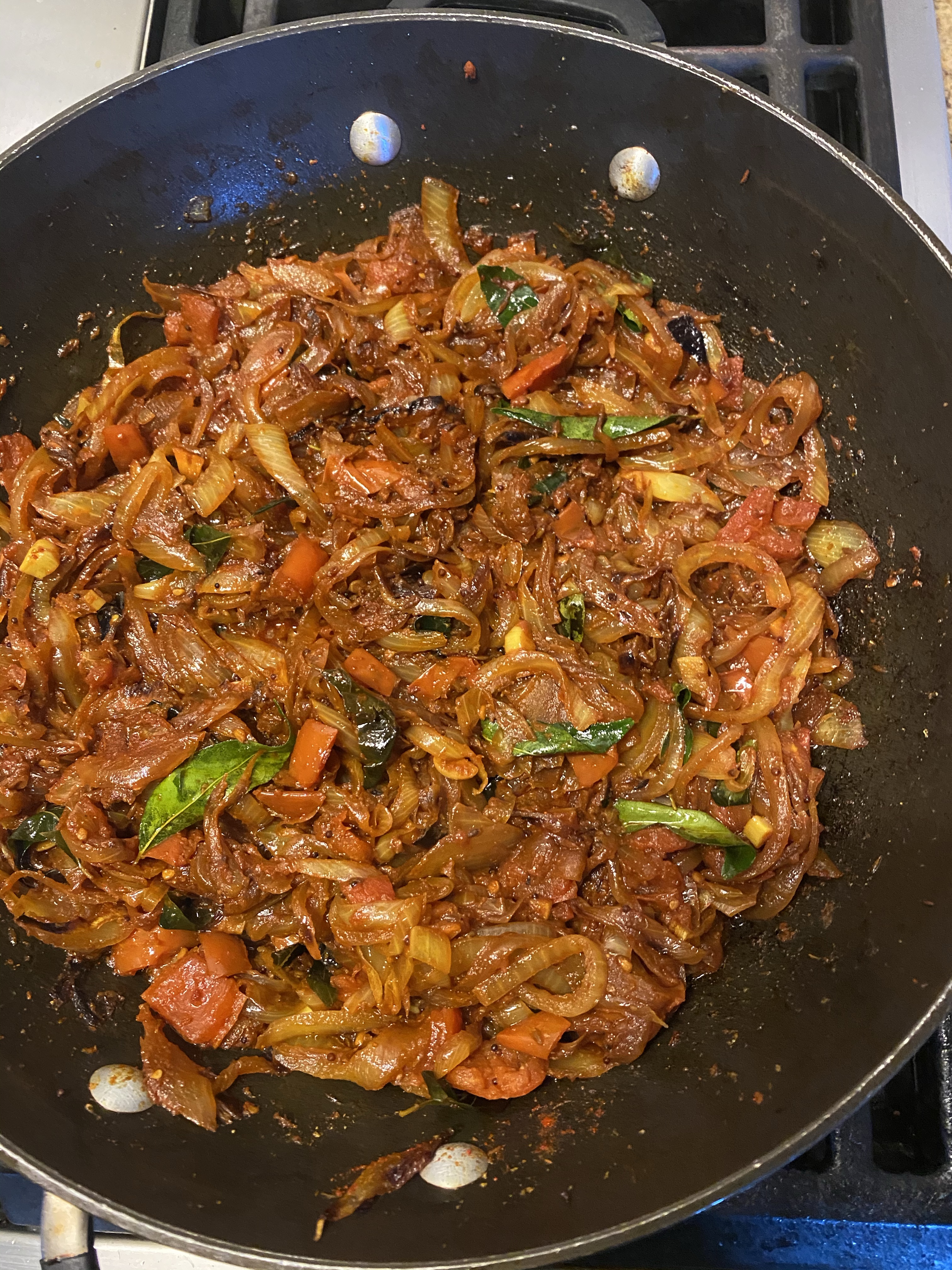
Judging the water content – you may want to add a half cup of water to the mix at this point . Close the lid and let it simmer till the whole thing is a red liquid with cleared oil on top – which will take maybe less than ten mins . Depending on whether you like the gravy smooth or with more texture – you can decide to blend it at this point . With red meat – I also add some chopped mint at this point . Now will be a good time to add more salt as needed .
9. To this mix – add the marinated meat . If you have the time – you can brown the marinated meat for a few mins before adding the red liquid you created for gravy . Now cover and cook till meat is done . Again, if the meat is a tough cut – you can pressure cook the marinated meat before you add it to the liquid . Finally add a little bit of freshly roasted and ground garam masala and stir it in .
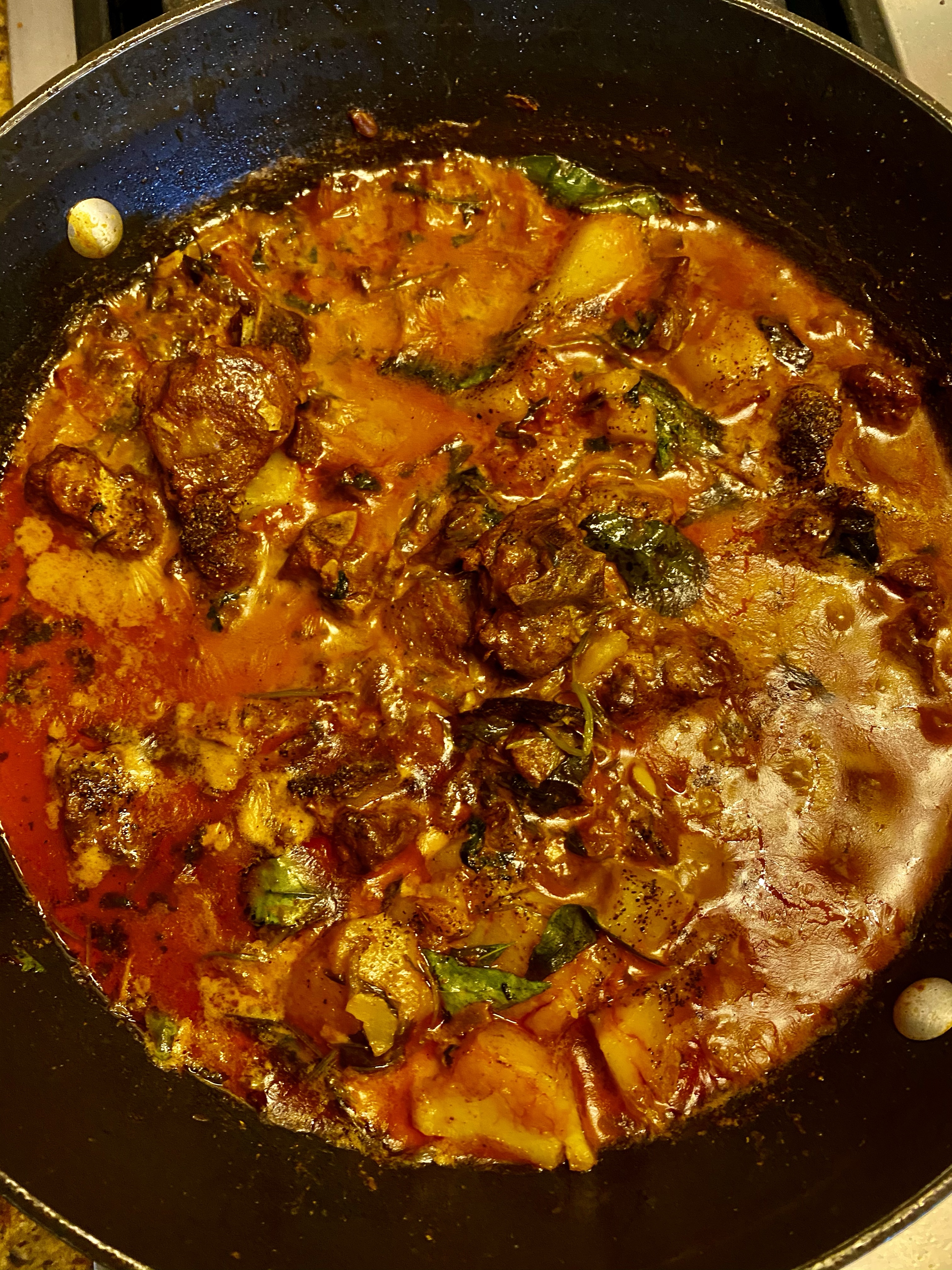
Your basic curry is ready at this point !
10. Now you have a few options for “value add” to your basic curry . You can thicken the gravy with coconut milk . If you prefer a richer flavor – you can soak some cashew and/or almonds and blend it to a paste in water or milk and add it to the finished curry and cook for a few mins . The third option is adding heavy cream . Always remember that these things all bring down the heat level as well . So if you like it spicy – you may want it extra spicy to begin with then bring it down a notch with the cashew paste or cream . If you like a bit more of sweetness – soak raisins and blend it with cream and add to the dish .
If the heat level went down a bit – don’t try to add chili powder again . You will ruin it . Switch to crushed pepper . Pepper used early in cooking tends to burn – so if at all I am using it , I use it at the end .
Now comes the magical finishing touch . Warm up a little ghee – add some cumin seeds to it (optional additions – curry leaves and red whole chillies in those cases where you don’t add cream etc ). When it splutters , put it on the curry . The aroma goes through the roof ! Chopped cilantro on top is a nice garnish for all dishes . Adds to the aroma too !
A simple pilaf to go with it
1. Warm up some ghee , add some cumin seeds, whole garam masala and sauté some frozen green peas and carrots . You can pick up a bag of mixed peas/carrots/corn from the local grocery .
2. Add left over rice to it . I prefer basmati but any rice is fine really . The point is that it shouldn’t be freshly made or hot . Add some salt and pepper to taste . I do this at high flame for a few mins
3. Optional : dump a small can of coconut milk into it and stir it in . Also from the value add category – add lightly roasted cashew on top , fried onions and chopped cilantro

The whole thing takes ten minutes and smells and tastes heavenly .
Give it a try and let me know how it turned out . Happy holidays !


 And Vijay Says...